
That Guy (Girl) Vol. 5
Carol Kaye: The Most Important Bassist You've Never Heard Of

Or: How One Woman Created the Sound of Your Childhood Without Getting Any Credit Whatsoever
The Moment
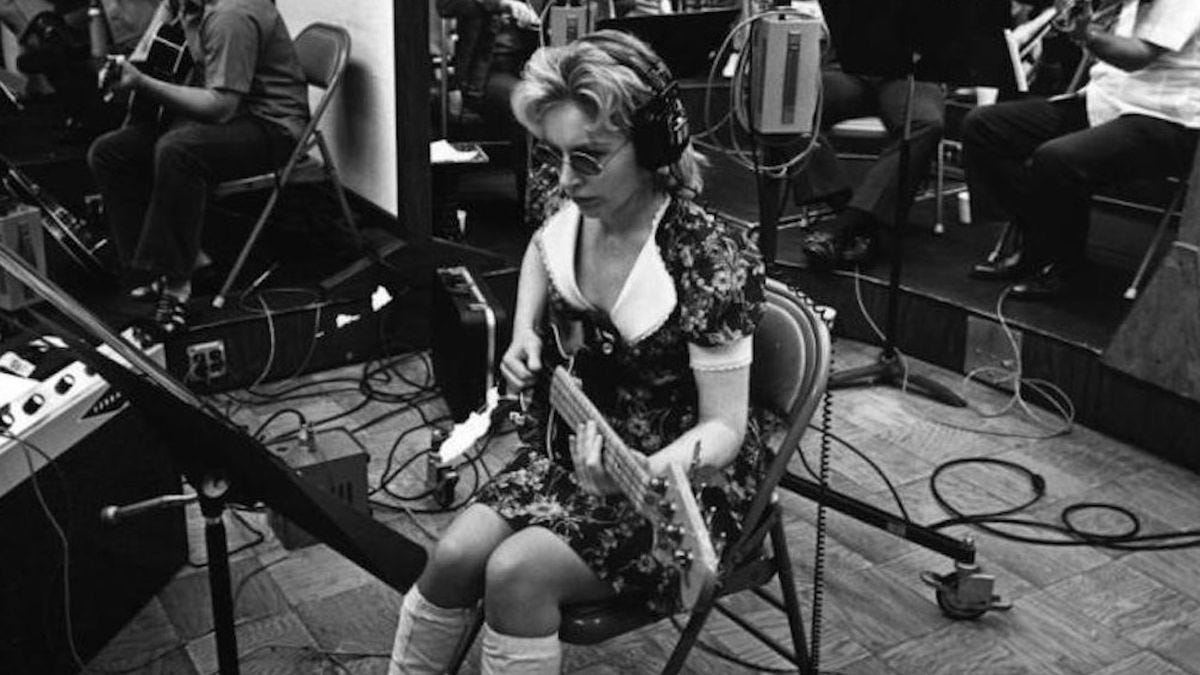
Picture it — 1963, Los Angeles, one of those recording studios on Sunset Boulevard where the air conditioning never quite works and everybody’s sweating through their shirts by ten in the morning. The producer — some cat in a short-sleeved button-down with sweat rings blooming under his arms — is pacing, looking at his watch, looking at the door, looking at his watch again. The bassist hasn’t shown. Traffic on the 405? Hangover? Who knows. Who cares. Time is money, baby, and the clock is ticking.
Then he spots her. Carol Kaye. Sitting there with her guitar, cool as anything, professional, reliable, the kind of musician who shows up fifteen minutes early with her instrument already tuned.
“Carol,” he says, “can you play bass?”
Now here’s where it gets good. Carol Kaye had never, not really, played bass before. But you don’t become Carol Kaye, you don’t survive in the jungle of the L.A. session scene, you don’t make your rent playing backup for jazz legends in smoky clubs, by saying no to opportunities. So she picks up the Fender Precision, this big, heavy four-stringed thing, figures it out on the spot, and plays the session.
That’s it. That’s the moment. Born from chaos, accident, someone else’s failure to show up on time. That moment changed everything.
The Numbers (Or: How One Woman Played On Your Entire Life)
Let’s establish something right now, right up front, so there’s no confusion: Carol Kaye is one of the most prolific bass players in the history of recorded music. Not “one of the best female bass players” — one of the best period, full stop, end of sentence. She played on an estimated ten thousand recordings across a career spanning over sixty-five years.
Ten. Thousand. Recordings.
That’s not PR fluff. That’s not some manager padding numbers. That’s Carol Kaye showing up to work every single day for decades and being so phenomenally, undeniably good that everyone — and I mean everyone — wanted her on their records.
She created basslines that are literally embedded in your neurons whether you know her name or not. Diana Ross and the Supremes? Carol. The Temptations? Carol. That song about raindrops falling on heads? Carol. The Beach Boys’ Pet Sounds — you know, that album that basically rewrote the rules of what popular music could be? That’s Carol on bass, laying down the foundation while Brian Wilson built his cathedral of sound on top of it. Good Vibrations? Carol. The theme song to M*A*S*H, that show your parents watched every week for eleven years? CAROL. Nancy Sinatra’s These Boots Are Made for Walkin’ — that strutting, swaggering, don’t-mess-with-me bassline that made you want to stomp down the street like you owned the whole damn city? That was Carol on electric bass working with Chuck Berghofer on double bass.
And for decades — DECADES — almost nobody knew her name.
The record-buying public didn’t know. The teenagers screaming at concerts didn’t know. But the musicians knew. The producers knew. When you needed a bassline that was clean, creative, and absolutely flawless, when you needed someone who could nail it in one take and move on to the next song, you called Carol Kaye.
The Girl From Everywhere
Carol came into the world in 1935 up in Everett, Washington, but her family dragged her down to Los Angeles during the Depression when times were so rough people were living in tents and standing in bread lines. Music became her escape hatch, her survival mechanism, her way out. She taught herself guitar as a teenager by listening to bebop jazz records — Charlie Parker, Dizzy Gillespie, all those cats — and figuring out the chord changes by ear. Just sitting there with the record player, moving the needle back, trying it again, until it clicked. That’s like learning to read by staring at books until the words spontaneously make sense, except harder.
By her early twenties, she was playing clubs alongside actual jazz legends, holding her own. Throughout the 1950s, she was a working guitarist in L.A.’s jazz scene, backing touring musicians who needed someone reliable. She was making a living doing what she loved, which in the music business is basically like hitting the lottery while simultaneously getting struck by lightning.
Then the early 1960s arrived with rock and roll exploding like a bomb, and suddenly there was this thing, this phenomenon, this loose collective of session musicians that somebody somewhere started calling The Wrecking Crew.
The Wrecking Crew (Or: The People Who Actually Made All Those Hits While You Were Screaming At The Beatles)
The Wrecking Crew was the name for the anonymous professionals who played on basically every hit record coming out of Los Angeles from the early ‘60s through the ‘70s. These weren’t the people whose faces appeared on album covers, whose names got screamed by teenagers, who showed up on Ed Sullivan. These were the professionals — the ones who could sight-read anything, nail it in one or two takes, and move on to the next session. They made the hits possible. They were the engine while everyone else got to be the chrome.
Carol was the only regular female member of The Wrecking Crew. The only one.
And she became one of their most essential members, not despite being a woman, but because she was simply that good.
After that first bass session in 1963 — the accidental one, the emergency substitution — Carol realized something: she was GOOD at this instrument. Really, truly, phenomenally good. She discovered she actually preferred bass to guitar. It was the key component of the backing tracks, the foundation everything else sat on, and it let her play more inventively than the relatively simpler guitar parts she’d been doing. Plus, and let’s be practical here, it was easier to carry one bass to sessions instead of swapping between three or four guitars.
After bassist Ray Pohlman left studio work to become a musical director, Carol became the most in-demand session bassist in Los Angeles. Period. The word spread through the studios like wildfire: Carol Kaye could play anything. She was fast. She was creative. She was PROFESSIONAL — showed up on time, didn’t complain, didn’t cause drama, just played. And she brought something special to every session: a melodic sensibility from her jazz background combined with the pocket and precision that pop music demanded.
The Hit Factory
Throughout the 1960s, Carol played bass on a substantial chunk of the records that appeared on the Billboard Hot 100. Brian Wilson working on Pet Sounds? He specifically said that Carol’s playing on the Good Vibrations sessions was essential to the arrangement he wanted. He noted that her bass with a pick “clicked real good”—gave it a hard, attacking sound that made everything move.
She played on Phil Spector’s Wall of Sound productions — all that massive, orchestral stuff he was doing. Her solo bass line in his production of River Deep, Mountain High became a key part of the song’s production. That recording’s in the Grammy Hall of Fame now.
She played on Motown hits when the Detroit labels brought their artists out to L.A. She played on Monkees records — yes, the made-for-TV band that everyone assumed was fake had real musicians, and Carol was one of them, giving them legitimacy note by note.
She came up with the introduction on Glen Campbell’s hit Wichita Lineman. That iconic, lonely, achingly beautiful opening that sounds like telephone wires stretching across the American West? That was Carol just doing her thing, being brilliant.
Carol has said she would sometimes play three or four sessions per day, and most of them turned into hit records. THREE OR FOUR SESSIONS A DAY. That’s like being an NBA player who shows up for three games every single day and casually drops 30 in each one.
And she wasn’t just playing notes off a chart, either. She was creating the parts, writing basslines on the spot that became essential to the songs’ identities. She was a composer without credit, an architect without recognition, a ghost who haunted every radio in America.
The Part Where You Want To Throw Something
Here’s what makes Carol’s story both remarkable and absolutely infuriating: she was rarely credited. Session musicians back then typically weren’t. The artists got their names on the label. The producers got their names on the label. The session players? They got paid their day rate - union scale — and went home. No royalties. No album credits. No acknowledgment. No nothing.
For a woman in that environment, it was even harder. Quincy Jones said in his autobiography that women like Carol “could do anything and leave men in the dust.” But she still had to be twice as good to get the same respect, had to prove herself constantly in a world that assumed men were better musicians simply for possessing a Y chromosome.
She did it by being undeniably excellent. By nailing parts on the first take. By being someone producers could rely on absolutely, no questions, no doubts, no hedging.
The musicians who knew, knew. Paul McCartney called her one of the great bass players. Geddy Lee of Rush praised her technique. Sting acknowledged her influence. There’s a story about Gene Simmons of KISS — Gene Simmons! Mr. Demon-Tongue himself! — coming to Carol for a bass lesson and sitting there quietly, humbly, absorbing what she taught him. That’s the respect she commanded among people who actually understood what she’d done.
The Crash
In 1976, Carol was involved in a car accident and semi-retired from music. For someone whose entire life was built around physical performance, whose body was her instrument’s instrument, this was catastrophic. But Carol Kaye doesn’t quit. In 1994, she underwent corrective surgery to fix the injuries and resumed playing and recording. She even collaborated with Fender to produce a lighter version of the Precision Bass that reduced the strain on her back.
Instead of fading away into bitterness or obscurity, Carol chose a different path. She became a teacher. She wrote instruction books. She made herself available to anyone who wanted to learn. She also began speaking publicly about The Wrecking Crew, helping document the session musicians who’d been systematically written out of music history.
In 1997, she collaborated with Brian Wilson again, playing on his daughters’ album. Full circle. Still going. Still creating.
Why You Should Care
Today, at nearly ninety years old, Carol is still teaching when her health allows, still playing, still inspiring new generations who discover that the sounds they’ve been listening to their entire lives were shaped by this remarkable woman who nobody bothered to put on the album covers.
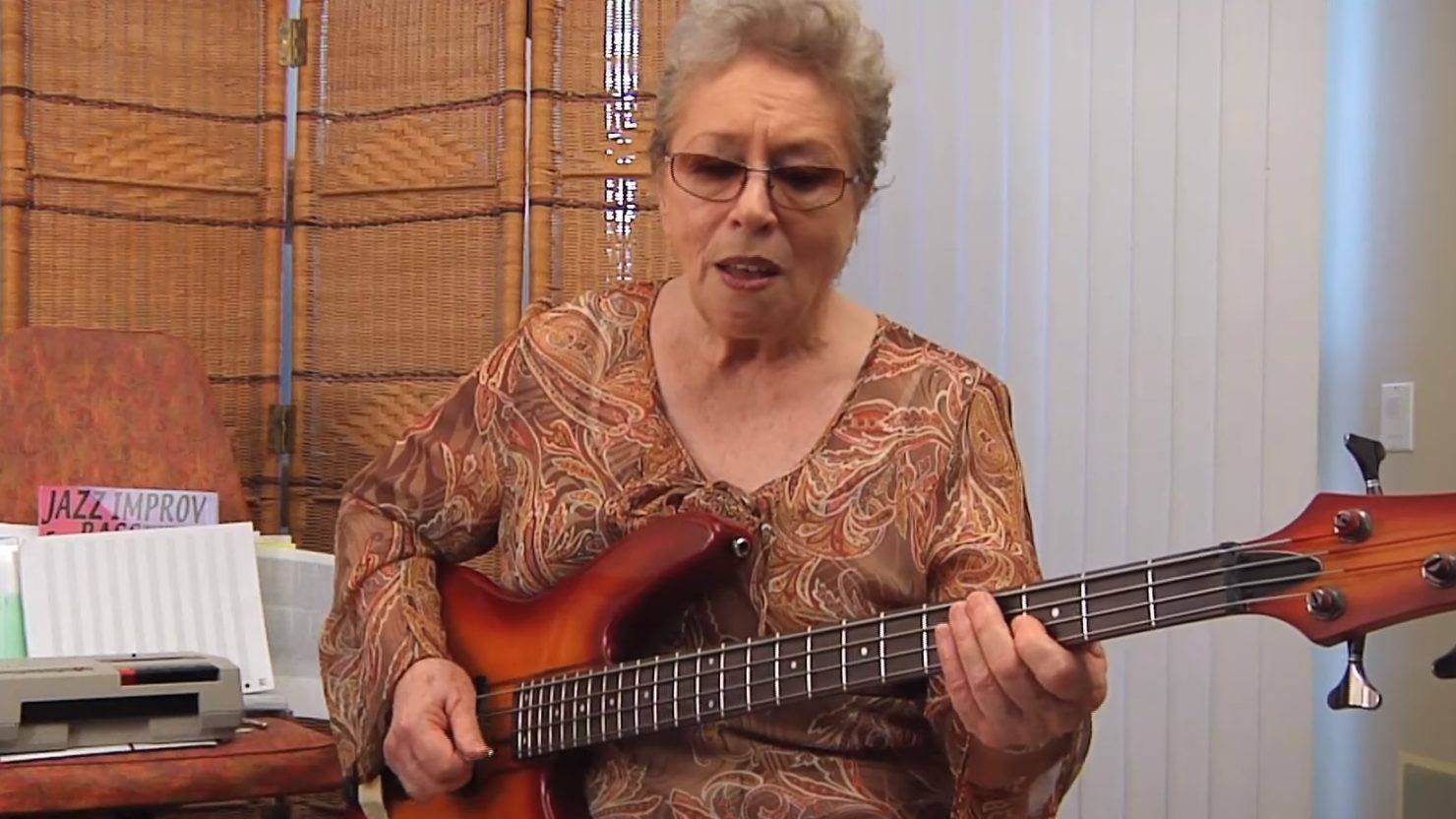
Despite being admired as one of the studio greats by people who understand music, Carol never expected to be well-remembered. At the time, most of the players thought pop music wouldn’t last longer than ten years—that it was just a fad, a flash in the pan, something that would disappear like hula hoops and poodle skirts. She’s genuinely surprised people still listen to tracks she played on sixty years ago.
But history remembers, even when it takes its sweet time doing it.
Carol Kaye was one of the architects of modern popular music. She created sounds that became part of global culture, which got embedded in the collective unconscious of multiple generations. She influenced every bassist who came after her, whether they knew it or not — whether they knew her name or not.
She proved that women belonged in recording studios not as novelties or exceptions or tokens, but as equals — as masters who could outplay almost anyone in the room. She proved you don’t need credit to have impact.
Though you deserve both.
And she’s still here, still playing, still teaching, still showing up like she always has, fifteen minutes early with her bass already tuned, ready to lay down another perfect take.
Amazing story. I always said that the music I grew up with in the sixties was the best. Now I know why.
Another banger!