
Joe Ely - Character Flaw
The Gospel of the Long Shot

One for me.
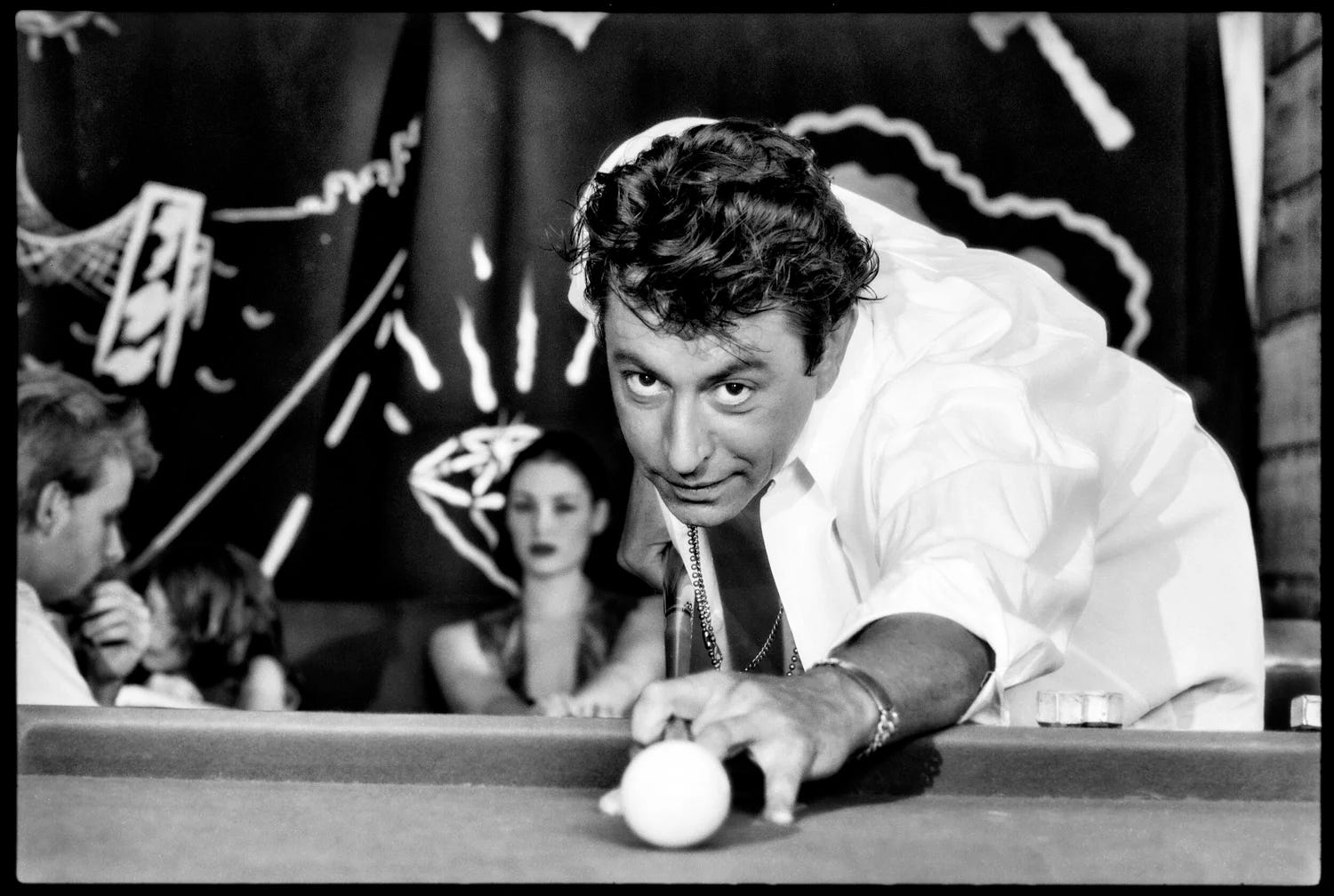
Joe Ely spent the better part of six decades making sure that whether you understood him or not, you heard him. He came up out of the flatlands of Texas, where the wind carries the dust of dead ranches and dead men alike, and he learned early that the only currency worth chasing was the sound itself. Everything else - the money, the fame, the critical anointment that came so late and so grudgingly - was secondary. This is a man who saw Jerry Lee Lewis playing on a flatbed trailer in a dust storm at six years old, hot dogs in hand, a Pontiac salesman hawking cars in the background while the microphone blew over in the wind. That is not a formative memory. That is an origin myth, the kind Homer would have set to verse if Homer had grown up on Route 66 instead of the wine-dark sea.
Character Flaw, the song he cut for the Kevin Costner feature Tin Cup, is Ely distilled to his purest proof, a shot of moonshine after a lifetime of watered-down bar whiskey. The song moves like a confession that refuses to apologize, which is the only kind of confession worth making. “If greatness courts failure, then failure’s my fame.” There is Ely’s whole career folded into a single couplet, a man who chased the long shot every time because the short odds were for cowards and accountants. He never hedged. He rode a motorcycle down the halls of his high school on the first day of his freshman year and got himself expelled for singing Cherry Pie at an assembly, and somewhere in there is the entire aesthetic of his music: reckless, unbothered by consequence, allergic to the safe play.
The song asks for nothing in forgiveness. “So if you call me a sinner, or if you call me a saint, when I come up a winner, don’t want to hear your complaint.” This is not bravado for its own sake. This is a man who joined Ringling Bros. Circus and tended llamas and the world’s smallest horse, who got kicked unconscious by a lead horse in Houston and was dragged to safety by an elephant trainer, who hitchhiked home down Highway 36 with two broken ribs and laughed only when necessary. A man who has been that close to the teeth of oblivion does not need your permission to call himself a winner. He has earned the right to define the terms.
What gets lost, criminally, in the official history of American roots music is that Ely was never a tourist in rock and roll passing through honky tonk on his way to respectability, nor a country traditionalist slumming in rock clubs for credibility. He fused the two because for him there was never a separation. He played the Cellar Club in Fort Worth, alternating twelve-hour sets with the band that would become ZZ Top. He shared bills with Carl Perkins and Merle Haggard in the same summer he was becoming friends with the Clash, who showed up at his gig at the Venue Theater in London and dragged him back to the studio where they were cutting London Calling. Joe Strummer heard something in the Lubbock dust that the Nashville establishment took another decade to notice, and when the Clash came to Texas the following year, they stayed for days, mesmerized by Buddy Holly’s hometown and the strange, beautiful desolation of West Texas cowboy culture. That is not crossover appeal. That is recognition between kindred outlaws, the punk and the honky tonker realizing they had been singing the same song in different keys the whole time.
The tragedy, if you want to call it that, though Ely himself would probably spit at the word, is the one the song names outright. “Although they call me a legend, they can’t remember my name.” The Flatlanders cut seventeen songs in Nashville in 1972 and a few dozen copies went out on eight-track before the whole thing vanished into a closet for a decade, only to resurface in England as a cult curiosity titled, with brutal accuracy, More a Legend Than a Band. Hundreds of thousands of copies sold over the years and not one fucking dollar of royalties made it back to the men who made it. That is the character flaw the song is really about, not some moral failing in Ely himself but the flaw in a business that chews up its most authentic voices and spits out the bones while lesser men get the gold records. Ely absorbed that injustice the way he absorbed everything, without complaint, and turned it into fuel rather than bitterness.
He never stopped moving, never stopped working the room whether the room was the Palomino in North Hollywood or the Lone Star Cafe in New York, where MCA rolled him in on a horse-drawn covered wagon like some deranged frontier apparition, or the stages of Europe where he opened for Carl Perkins and toured with Merle Haggard in the same summer. Chuck Berry, his childhood hero, sat in with his band in St. Louis. Bonnie Raitt tried to poach his guitarist Jesse Taylor, and Taylor stayed loyal, because that is what Ely inspired in the men who played behind him. Loyalty, not to a paycheck but to the sound and the man chasing it.
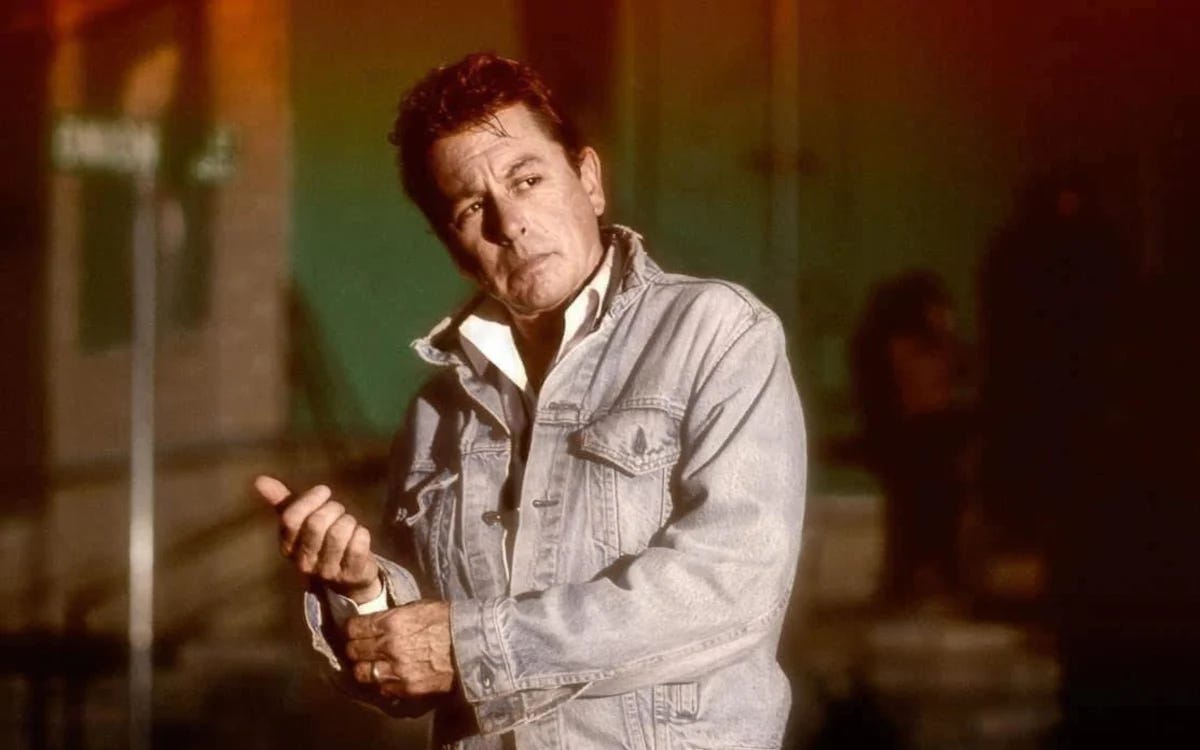
Mario Tarradell wrote that there is no mistaking a Joe Ely album, and he was right, but the deeper truth is there is no mistaking a Joe Ely life. The stinging, road-hued voice did not come from nowhere. It came from a boy who nearly died of rheumatic fever at seven, who sold his violin for a fraction of its worth to buy an electric guitar, who learned his chords in a garage from a man named Blasingame without knowing until thirty years later that Buddy Holly had once lived in that same house. The ghosts of Lubbock have always run through him like current through a wire, and Character Flaw is the moment he finally said the quiet part out loud. He does not want your pity, and he damn sure does not care about your permission. He wants the long shot, every time, world without end.
Joe Ely deserves better than the footnote status history has assigned him, wedged between the Outlaw Country patriarchs and the Americana upstarts who came after and got the magazine covers he’d already earned twice over. He is not a legend who happens to be forgotten. He is proof that legend and recognition were never the same animal to begin with, and that some men would rather burn true and go unnamed than dim their flame for the sake of being remembered correctly.
“And you can kiss my ass, it’s just a character flaw.”
The Flatlanders wrote the best song about my adopted city of Dallas that's ever been written.
Very nice tribute. A true journeyman that deserves more recognition.
My intro to Joe Ely came via Springsteen. In the 90's, Springsteen contributed to Ely's record and Springsteen brought Ely out on stage to join him a number of times over the years.
Over the past few months, I've been captivated by The Road Goes On Forever. Great storytelling.